
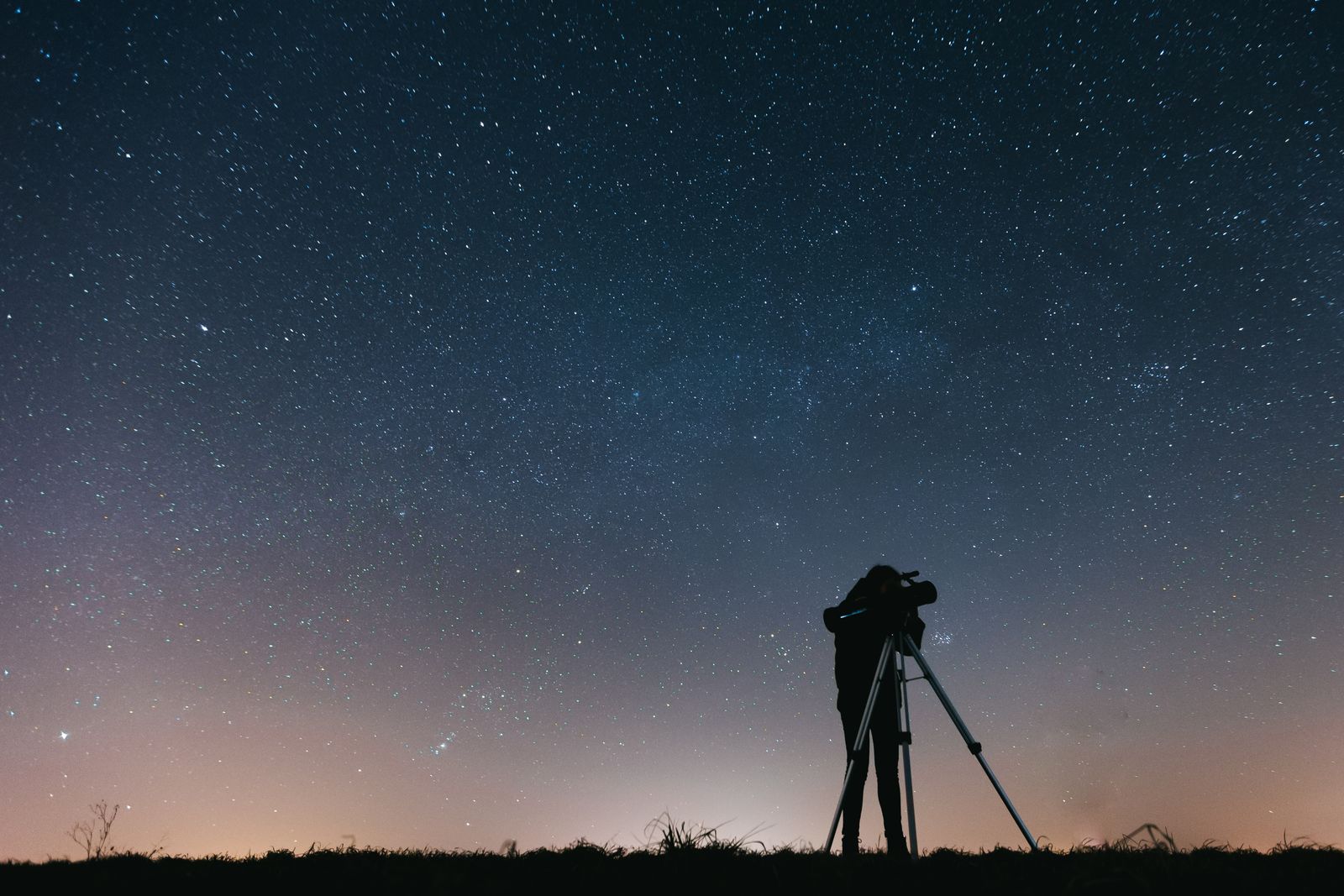
50.4°N · NEWQUAY, CORNWALL
Learn the sky you can actually see.
Recorded video courses in astronomy and astrophotography, from your first constellations by naked eye to imaging galaxies with a small telescope. 12 courses and 3 routes, watched online at your own pace and taken outside on the next clear night.
TONIGHT · 27 OCT
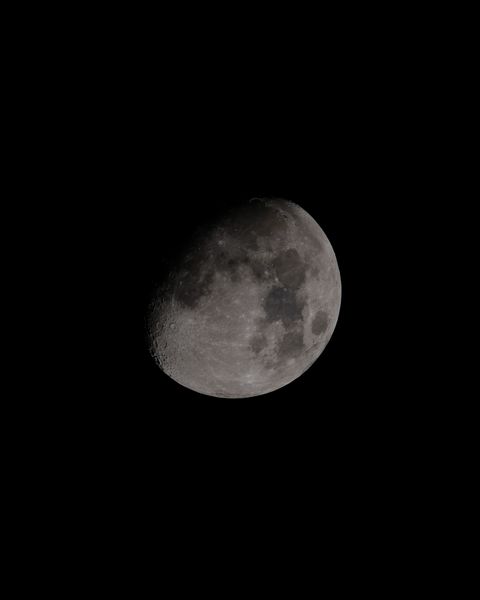
Full Moon
98% lit · day 16 of 29
A bright Moon washes out faint galaxies and the Milky Way. It is a good night for the Moon itself and the planets.
GOOD FOR TONIGHT
FOUR SHELVES · 12 COURSES
Where are you under the sky?
The courses are shelved by where you stand tonight, not by what you might buy next: start on the shelf that sounds like you, and move along the path when you are ready.
See every course-
SHELF I · NAKED EYE
First nights out
You can find the Moon and perhaps the Plough. Everything else up there is still a scatter of dots.
Open shelf: First nights out -
SHELF II · TELESCOPE
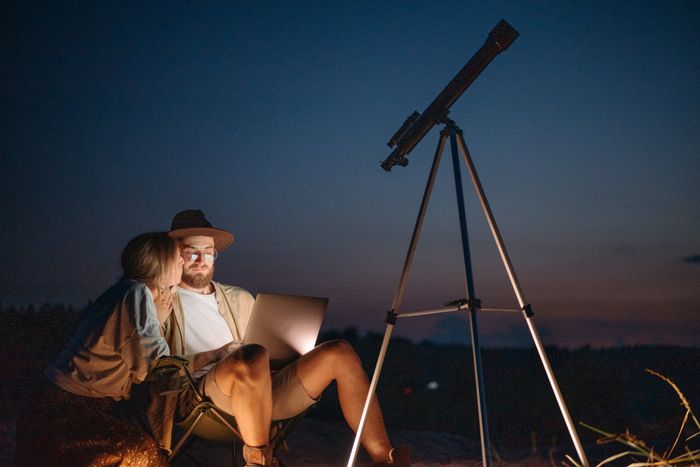
At the eyepiece
You own a telescope, or are about to, and want it to show you more than a wobbling blur.
Open shelf: At the eyepiece -
SHELF III · CAMERA
The sky with a camera
You have a phone or a camera and a tripod, and you want the stars to come out in the picture.
Open shelf: The sky with a camera -
SHELF IV · DEEP SKY
Into the deep sky
You are ready to image galaxies and nebulae and turn hours of raw frames into one clean picture.
Open shelf: Into the deep sky
NORTHERN SKY · 50–60°N
The British sky, season by season.
The sky turns once a year as well as once a night. These are evening sights that come back every year, wherever you are in Britain.
-
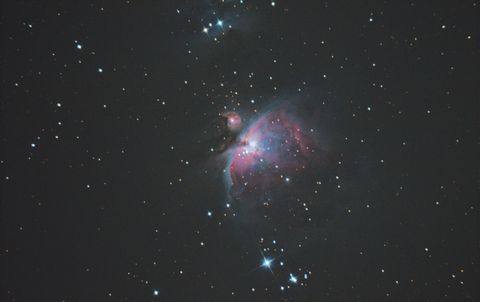
DEC – FEB
Winter
M42 · RA 05h 35m · DEC −05°
- Orion stands in the south on winter evenings; the misty patch below his belt is the Orion Nebula, visible by eye.
- Follow the belt down and to the left to Sirius, the brightest star in the night sky.
- Follow it up and to the right to Taurus, with the Pleiades cluster beyond.
Meteors Geminids, peak around 13–14 December · Quadrantids, early January
Reading the Night Sky: Constellations by Season -
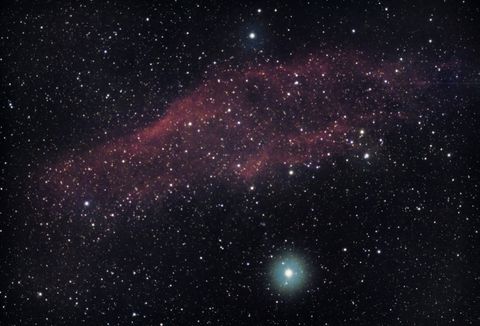
MAR – MAY
Spring
VIRGO · RA 12h 30m · DEC +12°
- The Plough rides high overhead in the evening, the easiest pattern in the British sky.
- Follow the curve of its handle to Arcturus, a bright orange star in the east.
- Leo is in the south, and between Leo and Virgo lies a patch of sky thick with distant galaxies.
Meteors Lyrids, peak in late April
Star-Hopping to the Deep Sky -
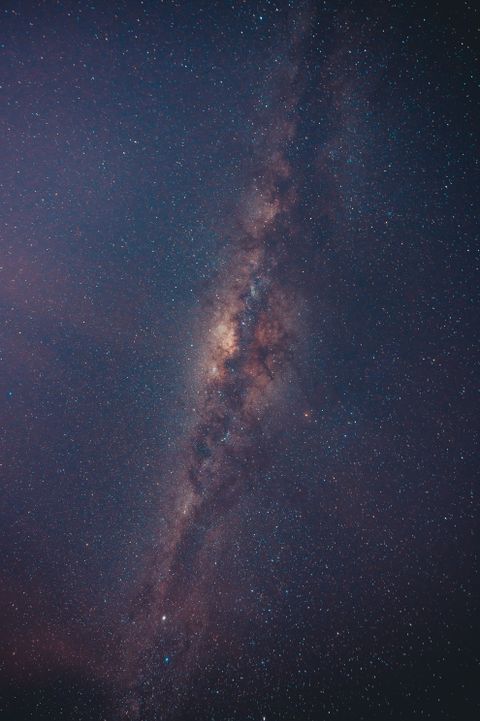
JUN – AUG
Summer
VEGA · RA 18h 37m · DEC +38°
- The Summer Triangle of Vega, Deneb and Altair dominates the evening sky, high in the east and south.
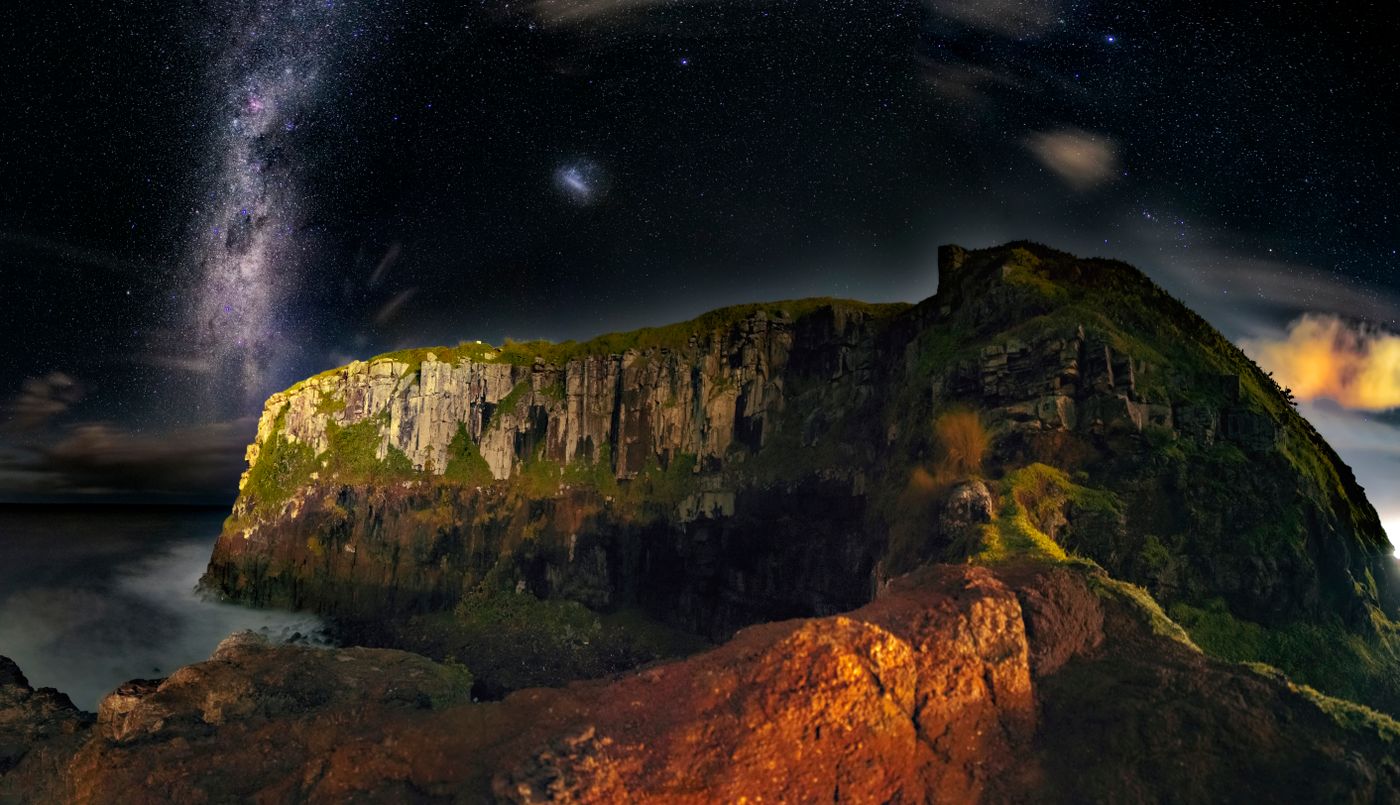
- From Britain the bright core of the Milky Way stays low in the south, so a clear southern horizon matters.
- Around midsummer the sky never gets fully dark from Britain; real darkness comes back in late summer.
Meteors Perseids, peak around 12–13 August
Milky Way Landscapes: Planning, Shooting and Stacking -
SEP – NOV · NOW
Autumn (the season now)
M31 · RA 00h 43m · DEC +41°
- The Andromeda Galaxy is at its best on autumn evenings, a faint oval by eye from a dark site.
- Find it from the Square of Pegasus, which climbs high in the south-east and south after dark.
- The Harvest Moon is the full Moon nearest the September equinox, rising soon after sunset several evenings running.
Meteors Orionids, peak in October
The Moon, Crater by Crater
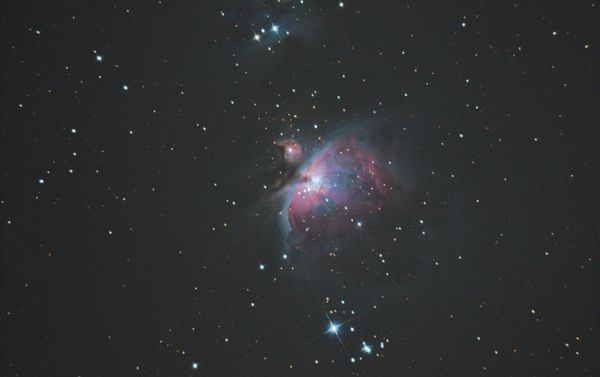
M42 · ALT 34° AT TRANSIT · S
What a telescope shows, and what a camera shows.
Your eye takes in light a fraction of a second at a time and starts again. A camera can keep collecting for minutes, and stacking adds hours, so faint detail builds up that no eyepiece will ever show.
Colour works the same way. In dim light the eye leans on cells that do not see colour, so most nebulae look grey at the eyepiece. The pinks and blues in photographs are real, but they need long exposures to come out.
Neither view is the lesser one. Seeing a faint galaxy with your own eye, at the end of a careful star-hop, is its own reward; so is a clean picture that took a whole night to make.
KIT LADDER · 6 STEPS
What do you need for each course?
| Course | Your eyes | Binoculars | A telescope | Phone or camera + tripod | Tracking mount | A computer | Price |
|---|---|---|---|---|---|---|---|
| SHELF I First nights out | |||||||
| Reading the Night Sky: Constellations by Season | Your eyes: needed | Binoculars: not needed | A telescope: not needed | Phone or camera + tripod: not needed | Tracking mount: not needed | A computer: not needed | £533 |
| Binocular Astronomy from a British Back Garden | Your eyes: needed | Binoculars: needed | A telescope: not needed | Phone or camera + tripod: not needed | Tracking mount: not needed | A computer: not needed | £571 |
| The Moon, Crater by Crater | Your eyes: needed | Binoculars: needed | A telescope: needed | Phone or camera + tripod: not needed | Tracking mount: not needed | A computer: not needed | £608 |
| Keeping an Observing Log: Notes, Sketches and Meteor Counts | Your eyes: needed | Binoculars: not needed | A telescope: not needed | Phone or camera + tripod: not needed | Tracking mount: not needed | A computer: not needed | £579 |
| SHELF II At the eyepiece | |||||||
| Choosing and Setting Up Your First Telescope | Your eyes: not needed | Binoculars: not needed | A telescope: needed | Phone or camera + tripod: not needed | Tracking mount: not needed | A computer: not needed | £758 |
| Planets at the Eyepiece | Your eyes: not needed | Binoculars: not needed | A telescope: needed | Phone or camera + tripod: not needed | Tracking mount: not needed | A computer: not needed | £689 |
| Star-Hopping to the Deep Sky | Your eyes: not needed | Binoculars: needed | A telescope: needed | Phone or camera + tripod: not needed | Tracking mount: not needed | A computer: not needed | £857 |
| SHELF III The sky with a camera | |||||||
| Night-Sky Photography with a Phone or Camera on a Tripod | Your eyes: not needed | Binoculars: not needed | A telescope: not needed | Phone or camera + tripod: needed | Tracking mount: not needed | A computer: not needed | £634 |
| Milky Way Landscapes: Planning, Shooting and Stacking | Your eyes: not needed | Binoculars: not needed | A telescope: not needed | Phone or camera + tripod: needed | Tracking mount: not needed | A computer: not needed | £1,123 |
| Tracking Mounts and Polar Alignment | Your eyes: not needed | Binoculars: not needed | A telescope: not needed | Phone or camera + tripod: needed | Tracking mount: needed | A computer: not needed | £968 |
| SHELF IV Into the deep sky | |||||||
| Deep-Sky Imaging with a Small Refractor | Your eyes: not needed | Binoculars: not needed | A telescope: needed | Phone or camera + tripod: needed | Tracking mount: needed | A computer: not needed | £1,486 |
| Processing Astro Images: Calibrate, Stack and Stretch | Your eyes: not needed | Binoculars: not needed | A telescope: not needed | Phone or camera + tripod: not needed | Tracking mount: not needed | A computer: needed | £1,267 |
The catalogue in numbers
- 12recorded courses
- 3routes, several courses in order
- 472video lessons
- 89hours of video
- 18months of access to each course
READ THIS FIRST
Before you buy
Six plain things these courses are not, so nothing surprises you after you pay.
Recorded and streamed only
Every lesson is a video you watch online. There are no live classes and no scheduled sessions.
No tutor and no marking
Questions at the end of each unit are answered on screen. Nobody reviews your images or your notes.
Not downloadable
Lessons stream in your browser; they cannot be saved for offline viewing.
No certificate or accreditation
The courses teach you to use the sky. They do not lead to a qualification.
Clouds and streetlights are not ours to control
What you see depends on the weather and your sky. Every course shows what can be done from a suburban garden.
Access lasts 18 months
Each course stays open for 18 months from the day access starts, long enough to follow the sky round a full year.
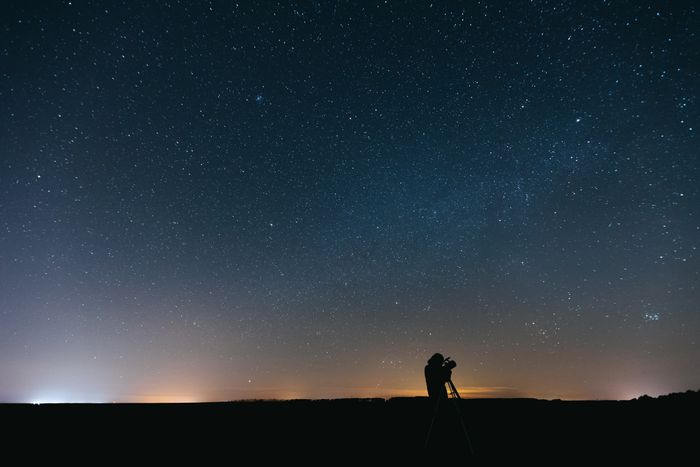
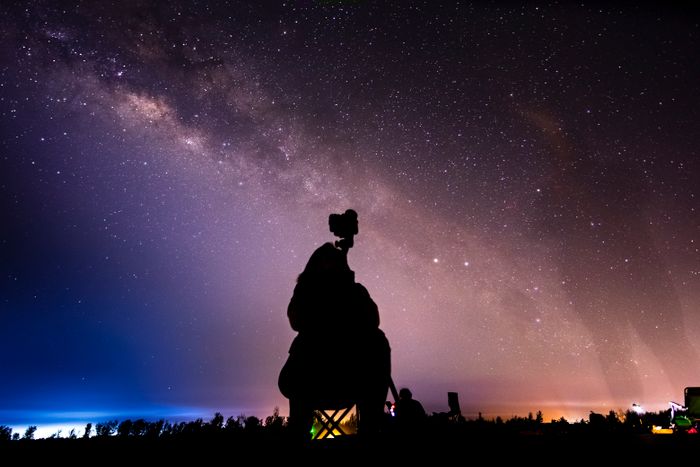
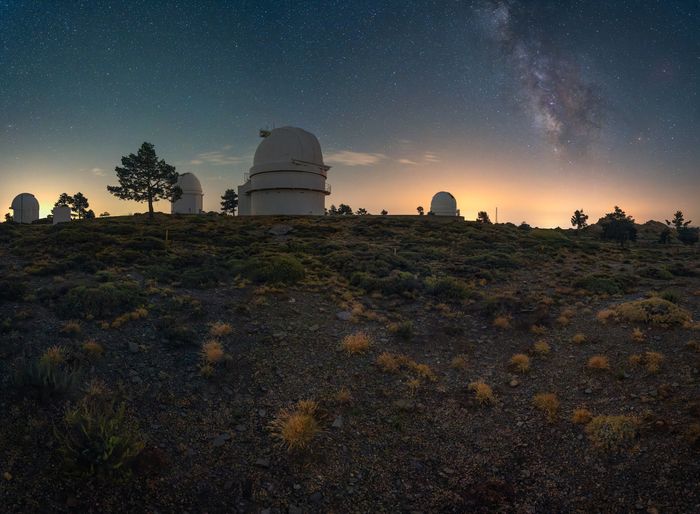
Four shelves in pictures
CLEAR SKIES · QUESTIONS
Questions people ask before a first clear night
If your question is not here, ask us. The chat in the corner is answered by a person, not a bot.
Contact usHow do I get access after paying?
Your access details are emailed within one working day of payment, to the address you give at checkout. Your order page shows where things stand in the meantime.
How long can I watch?
18 months from the day access starts, as often as you like within that time. The lessons stream online and are not downloadable.
Is there a tutor or marking?
No. The courses are recorded, with questions at the end of each unit answered on screen. If something about a course or your order is unclear, the chat is answered by a person.
Do I need a telescope to start?
No. 7 of the 12 courses need no telescope at all, and the First nights out shelf starts with your eyes alone. The kit guide shows what each course uses.
I live in a town. Is it worth it?
Yes, with honest limits. The Moon, the planets, bright clusters and double stars all show well from a lit suburb, and every course shows what can be done from a suburban garden. Faint galaxies and the Milky Way need a darker sky, and the courses say so.
Which course should I start with?
Start from where you stand: no equipment means the First nights out shelf, a telescope in the cupboard means At the eyepiece. The planner lets you pick a set and see the hours and weeks it takes at your pace.
Can I get a refund?
Courses are digital content that starts straight away at your express request, so once access starts the 14-day right to cancel no longer applies. Before access starts, you can still cancel within 14 days. If a course is not as described, your rights under consumer law are unaffected. The details are in our Terms.
FIRST LIGHT
Clear night forecast? Start tonight.
Pick one course, watch the first unit this evening, and take it outside when the cloud breaks.
Choose a course